Nomi AI companion
An AI built using real therapist conversation data. Ask anything, any hour — including "what do I do with this test result?"
Research-informed · Free · Affirming
A neuroaffirming screening tool with age-matched questions. Recognising a profile sooner helps you reach the right support, communities and resources — whatever the result.
This screening is an informal check rather than a clinical diagnosis, and its results are best reviewed with a GP, paediatrician or qualified clinician. Being autistic is a natural form of human neurodiversity.
About you
1 of 23
Answer from everyday life — not the best day or the worst.
Screening complete · 100% free
Enter your email and we’ll reveal your score instantly — and send a full copy of your results, plus a plain-English guide to what to do next, straight to your inbox.
That email doesn’t look right — mind checking it?
Free, no spam, unsubscribe any time. Your results stay private.
Results unlocked — a full copy is on its way to .
This screening is an educational guide based on your answers, not a medical diagnosis. Only a qualified professional can assess autism. If anything you read here worries you, your GP or paediatrician is the right person to talk to.
What actually helps now
Whatever your result, waiting lists and school conversations move slowly — and daily life doesn’t wait. Nomi puts the tracking, routines, answers and community that help most into one free iOS app.

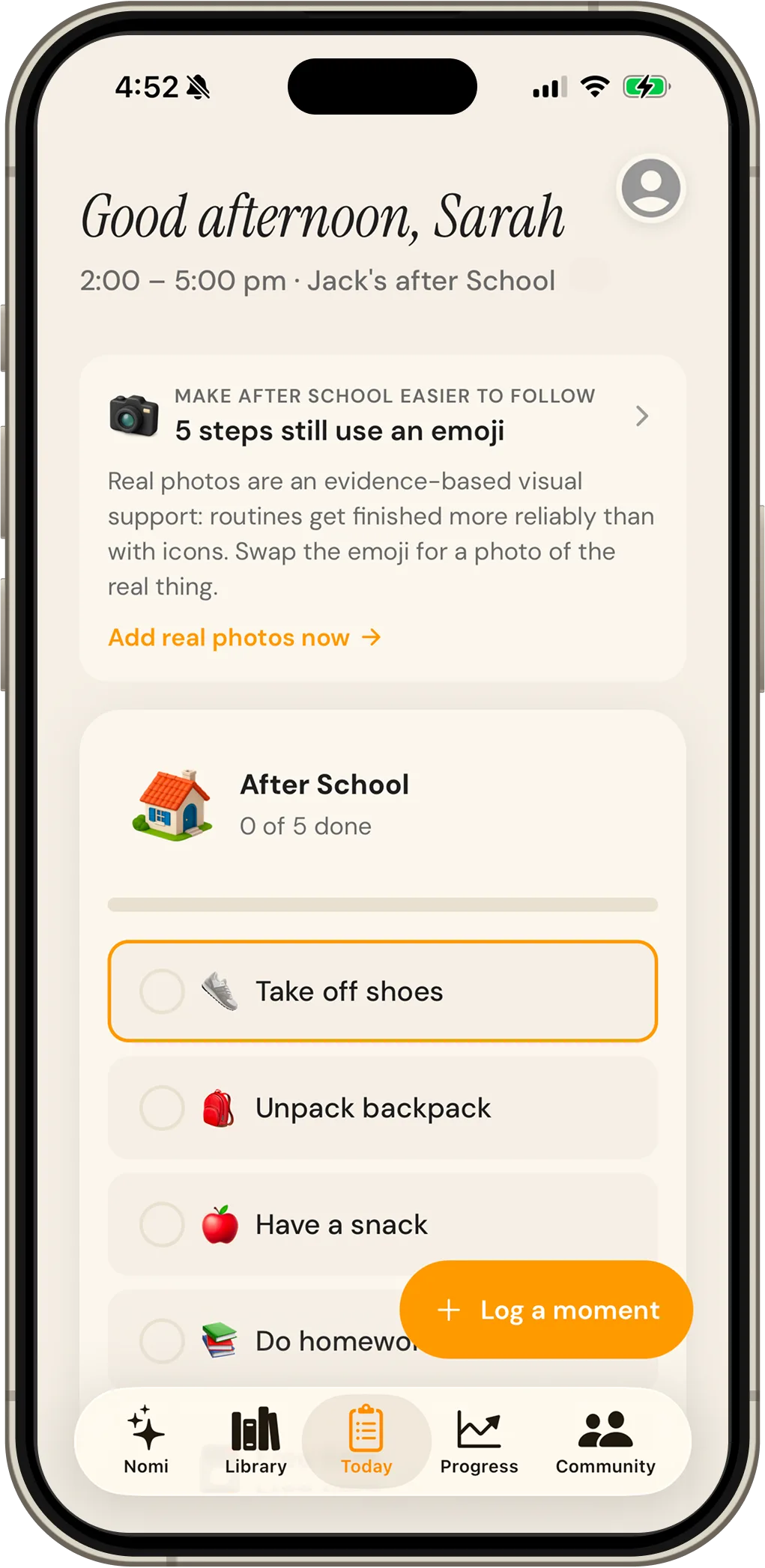
Step-by-step schedules for the parts of the day that are hardest. Predictability removes most of the anxiety around transitions.
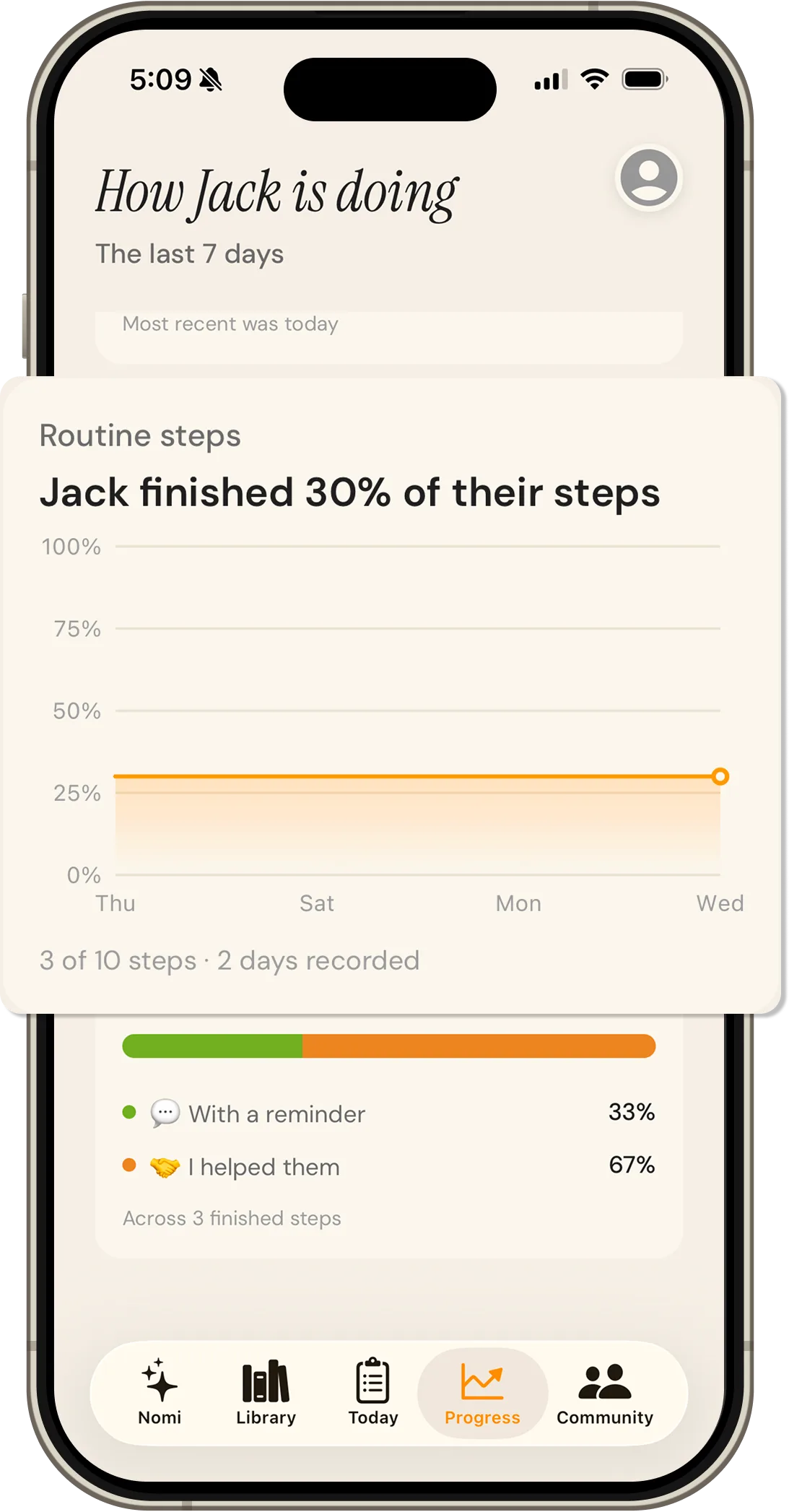
Everything you log becomes a trend — exactly the evidence that moves referrals, assessments and school support forward.
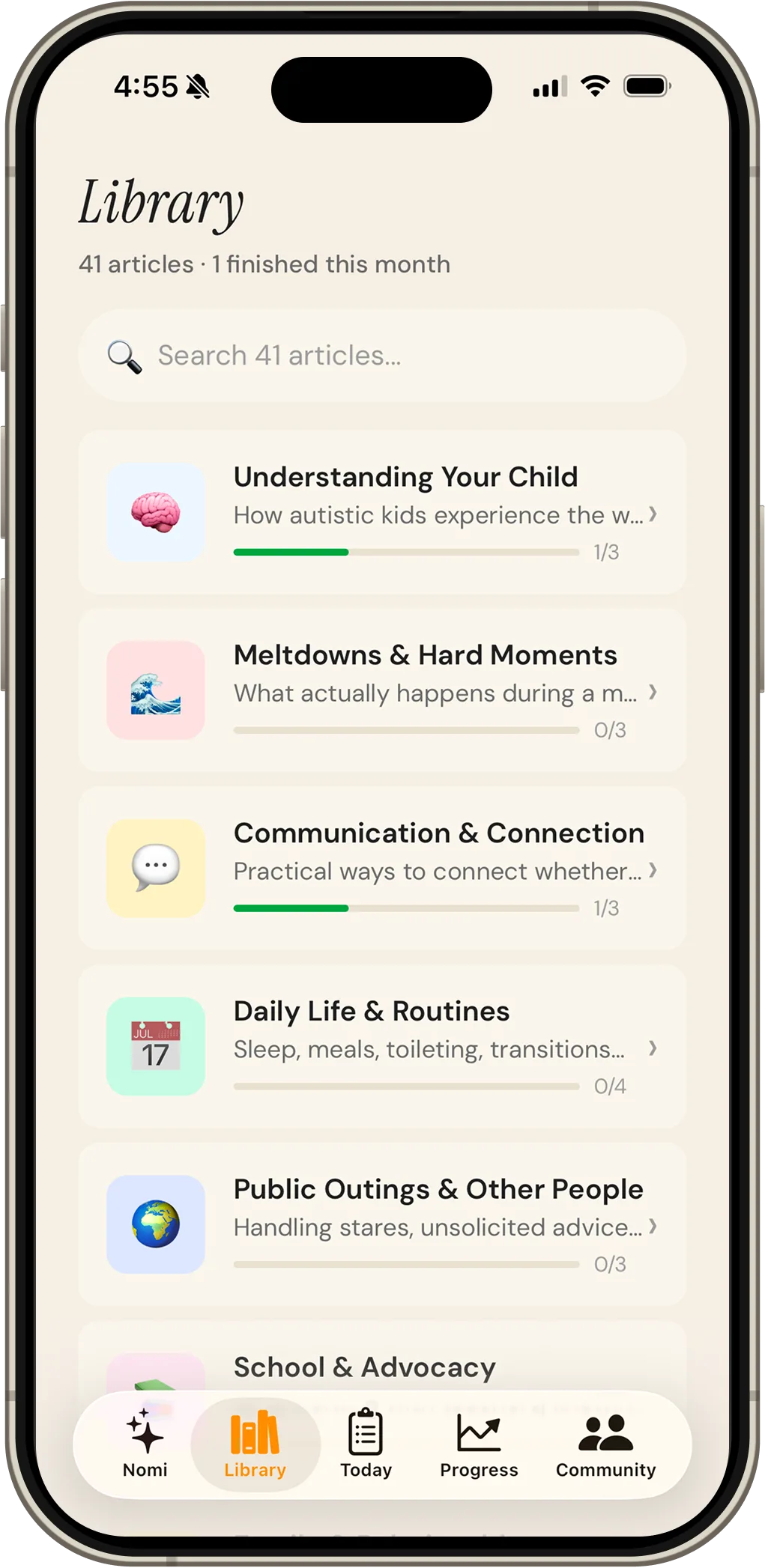
Short, practical reads on meltdowns, communication, daily life and school — grouped so you can find the one you need tonight.
An AI built using real therapist conversation data. Ask anything, any hour — including "what do I do with this test result?"
Log meltdowns with triggers and warning signs. Patterns surface within weeks — and export cleanly for assessments.
Emoji-based mood tracking your child can use alone, with suggestions for what tends to help.
Step-by-step routines for mornings, bedtime and homework — predictability that lowers daily anxiety.
Track textures, temperatures and reactions to understand and gently expand what your child eats.
Colourful countdowns that make time visible, so transitions stop being a surprise.
Goals and rewards built around your child’s actual motivations, celebrating what goes well.
Record and transcribe observations before the detail disappears — gold for assessment appointments.
A point-to-communicate library supporting non-speaking children and AAC users.
Plain-English guides on signs, diagnosis, sensory needs and school — written for parents, not clinicians.
You just did the hard part — looking honestly at the question. The next part is easier with company: track what you see, build routines that lower the daily temperature, and ask Nomi AI anything at 2am. Free to download, two minutes to set up.